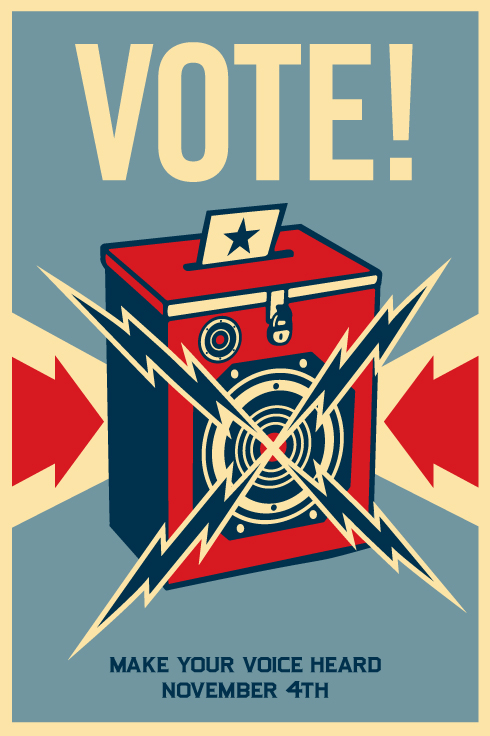
Frank Shepard Fairey has made a very comfortable living marketing his brand of subversive, non-conformist art to the masses. The most common image associated with him is the iconic Andre The Giant “OBEY” graphic:

Fairey has credited the inspiration for this design as coming from the 1988 cult classic John Carpenter film, They Live.

The movie is more social commentary than a black comedy or horror film, though the concept is often lost on those viewing it. The clip below illustrates the gist of the premise:
[youtube=http://www.youtube.com/watch?v=7Lwlx3GnLGs]
The sunglasses represent an awakening, a moment of seeing things for what they really are, and, for the sake of popular commercial entertainment, the villains are these “alien” beings that have taken over. The truth is more sinister, as the scenario in the video above is not far from reality in our modern world. Our villains are not aliens with a clear agenda, but rather ourselves. The ability to wield power over others is not something innate and explicit. It is something that must be given away, and that is where the foundation of modern life lies: compliance and authority.
We are assaulted daily by rules, restrictions, statutes, laws and other ways in which we are impaired from enjoying true freedom. But most people fail to consider their complicity in this process, simply throwing their hands up and stating, “that’s just the way it is.” The color of a stoplight does not determine a vehicle’s capabilities, nor does it indicate whether or not an individual will or will not drive in a certain direction at a certain time. It’s a symbolic abstraction; we agree as a society that when the light is red, we will stop, and that when it is green, we will go. When someone deviates from this behavior, they are seen as crazy or reckless or rebellious. This is the basic idea behind compliance as it pertains to our world today.

Often, “lesser” offenses – jaywalking, parking in a handicapped space in order to quickly run inside a business, playing “dine and dash” (eating without paying), shoplifting inexpensive items (ex. a pack of gum), taking property from your place of employment, speeding, downloading media illegally – are judged as acceptable or tolerable ways to challenge authority, whereas more “serious” crimes – murder, rape, kidnapping, robbery, assault – are seen as unacceptable and worthy of harsh punishment. Why? Legally speaking, these things are on equal ground – there is a clear definition of what is and is not considered a violation of the given code, statute or law. What makes them different are the prevailing societal mores that provide us with context in which we feel comfortable judging the world that surrounds us.
Clearly, there is a difference between a teenager who is convicted of manslaughter when a gun he is playing with accidentally goes off, killing a friend, and a person who habitually and purposely shoplifts items worth $20 or less in value. Which one would have the harder life? Manslaughter is a felony, and the stigma attached to a moment of poor judgment will follow that person for the rest of their lives, coming up in job interviews, rental contracts, credit checks and all sorts of other places. The person who is a habitual shoplifter – and who clearly does not care to reform or change their behavior – would likely not face the same kind of stigma. In general, white collar crime is tolerated as part of “the way things are.” Embezzlement, taking advantage of bailouts, gaming the stock market – these things are not often met with the same outrage.

Ultimately, these types of judgments can be traced back to the idea of compliance as it applies to current societal standards. There was a point where being an athiest could get you hung or burned at the stake, but with the Gen-X/Gen-Y crowd, it is very common. Not too long ago, admitting to homosexuality would get you fired, beaten, or worse – but now, there is a massive push for popular acceptance and validation of it. These things have fallen into vogue, making it easier for Richard Dawkins and Perez Hilton to exist and flourish in a world where, just a century before, they would have been targets of a witch hunt. It doesn’t matter whether atheism or homosexuality is “right” or “wrong” (despite the wealth of arguments about them), it matters whether or not it is agreed upon that these things comply with the collective opinion of what is acceptable for our society. But let’s face it – fear of being seen as non-compliant drives us more than a desire to be compliant.
So, for the most part, we stop at red lights. We pull over to the side of the road when an emergency vehicle is approaching. We pay our taxes. We do these things because we submit ourselves to the authority we’ve granted others in order to govern us. We exchange our true freedom for the relative comfort of what we perceive as a stable and just society. But what is authority, anyway? On the most basic level, authority is legitimacy and expertise, the state of having some sort of prestige in a given context. This status is not something inherent in an individual, but rather something that is granted to them. As more people agree to acknowledge the authority granted to someone, the more it is legitimized and accepted as true.

It’s obvious the kind of power and responsibility that is granted to what we typically conceive of as an authority: governments, military bodies, global organizations such as NATO and WTO. Their influence is often direct and easily measured. When a war is declared, when disaster hits, when assistance is needed, society as a whole entrusts these organizations to exercise their authority with the best judgment. We rally behind troops, we donate money, we send our thoughts and prayers, but we ultimately rely on someone else to do what is necessary to achieve a desired goal or outcome.

Often, we place a lot of trust in authority figures despite continual evidence that our faith is misguided. In the past year, there has been a lot of attention in the news to product recalls for spinach, peanuts, tomatoes, jalapeños and the over-the-counter nutritional supplement Hydroxycut. All of these products fall under the authority of the Food & Drug Administration, who maintain an active list of product recalls. It’s quite long, and many of the recalls issued are quite terrifying. There are mentions of undeclared ingredients, labeling mistakes and the presence of salmonella, E. coli and other contaminants. Some of these can be fatal – e.g. a product which contains nuts, or has been processed in a facility that also processes nuts fails to state this fact on the label. Often, these recalls are only discovered once worst case scenarios begin to unfold (i.e. a body count) – as was the case with the massive peanut recall that led to a wide variety of products being recalled earlier this year.

There is no one single individual to be held to account for food safety at the FDA or anywhere else at the federal level. – Rep. Rosa DeLauro
It took 4 days after salmonella was discovered in the supply of Peanut Corporation of America’s supply before action was taken to recall products. Even then, as we waited with bated breath, an ever-increasing list of products were recalled over the span of this past year, with constantly-changing information about what we could consider “safe.” But in all of this, few people were wondering why we continue to allow ourselves to place faith in such a plainly irresponsible authority. PCA took the fall, driven out of business despite the fact that their shady practices and corner-cutting, profit-chasing greed was made possible by the very authority we believe will keep us safe from harm.

Religion is another authority that is widely relied upon as a source of comfort and security. It’s arguably the most polarizing authority there is, though the level of passion and activism varies wildly from religion to religion, and even from church to church within the same religion. What is truly interesting about this authority is that much power, responsibility and energy has been given over without any obvious justification for it. 2,000 years ago, some events occurred, a number of men retold their versions of those events, and here you have a continual dedication and fanaticism based around the belief that the things described in a book are indeed fact – nay, divine truth – that cannot and should not be questioned.
But why should witnessing a burning bush be seen as miraculous? There are a number of natural hallucinogens that could explain away this phenomenon. In fact, this theory has been researched in detail. If such a thing were to happen today, most would joke that the person experiencing such a thing must be high. What of a person who is dead miraculously rising from the grave? Criss Angel’s Mindfreak is a highly-rated show dedicated to “miraculous” feats of human will. What would have been something of biblical importance 2,000 years ago is merely popular entertainment today. Contextual perception.

The elephant in the room with much religious dogma is that, while many logical and measured arguments could be made to dispute or rebut whole passages of religious text, one simply is assured that by their continued faith, they will ultimately be rewarded. Again, no proof or evidence of the rewards exist in the tangible world, and not a single person has come back from a state of death to attest to the presence of a true afterlife. It’s all conjecture. Every religious text is ultimately weakened by the same exact flaw: they are the words of men, written by mere humans. Subject to the same flawed, subjective experiential shortcomings that we experience today. Love, fear, anger, arousal, mind-altering substances – all things that can affect one’s perception of reality and all potential sources of confusion or distortion. Two different people could see two completely different things.

Still, authority is granted to religious texts. Despite the fact that few men would sever their wife’s hand if she were to touch his assailant’s penis. Or shun a man for sleeping with a woman while she’s on her period. Or murder men who have slept with each other. Or murder nonbelievers. Selective tolerance of religious mores is no different than selective tolerance of societal mores. We jaywalk and we sleep with our girlfriends or wives while they’re menstruating. These are looked upon as “lesser” offenses and perfectly acceptable. But what’s the point of granting authority if you practice selective compliance? Why recognize the authority at all? Religious fundamentalists are often regarded as crazy or fanatical, but they are recognizing the exact same authority that millions of people do, only in a far more passionate and strident way.
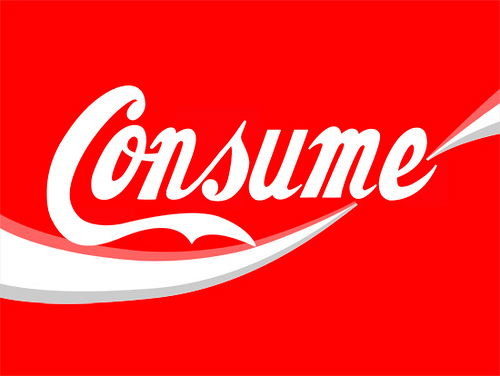
Ultimately, though, consumerism and mass media are probably the most sinister form of authority. Where overt authorities like governments and religions are making clear grabs for power with (mostly) obvious intentions, mass marketing corporations and media do everything they can to obscure their motives. Marketing agencies work diligently to build brand trust with consumers. Child psychologists are recruited in order to more effectively take advantage of developmental weaknesses that can be exploited for profit. Celebrities and other public figures are paid to create a buzz around a brand and to attach their perceived positive qualities to a product.
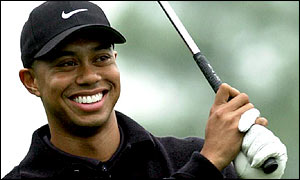
When we see Tiger Woods wearing a Nike hat, we are being conditioned to associate a brand with a proven history of human rights violations and child labor with a person who seems like an infallible hero, an underdog, an untarnished pillar of achievement. We trust Nike. We associate good feelings with their brand. And it all operates on a purely subconscious and devious level. Misdirection. We don’t see Tiger Woods’ contract. We don’t see the hat get produced. We don’t see where the money comes from and where it’s spent. We only see the story they’ve carefully concocted to sell a brand.
Name brands have taken over our language, too. When our noses run, we ask for a Kleenex. When something happens that’s worth remembering, it’s a Kodak moment. Don’t know the answer to something? Google it. These are authorities working on an entirely different level, because rather than a conscious participation, they rely on us to personalize their form of authority so we no longer even consider an alternative – to ask for a tissue, to take a photograph, to search the internet. It becomes second nature to think in terms of their authority as the dominant brand in their industry.

As a world ravaged by the Great Depression and World War II struggled to rebuild a life in the ashes of their ancestors, the blind optimism of the 50’s ushered in a new wave of mass consumption that has lived on for over 5 decades without any sign of slowing down. What many religious zealots credit as the decline or downfall of our society is merely a case of switching one authority for another. Where in the 1940’s, governments were at war and faith was tested, the 1950’s brought a desire to indulge and escape recent events through wholesome, positive fun. A whole generation of “baby boomers” grew to represent the rosy outlook of the time, where people were encouraged to live it up and chase “the American Dream.” Consume for the sake of consuming, because you can, because you’ve earned it after surviving through such tragedy over the past few decades. So we began to entrust our happiness and well-being to a new authority; mass consumerism.
Girls mindlessly flip through issues of Cosmo, quizzing themselves on their sexual prowess. Guys pore over the pages of Maxim, hoping to catch a glimpse of Megan Fox or Scarlett Johansson in some state of undress. Parents park their children in front of the TV, trusting the Disney Channel to provide appropriate distractions. VH1 approves another season of Charm School, knowing that it’s a guilty pleasure for a growing number of people. These things become part of our daily routine, to fill up the time and help distract or entertain us and get us through the day. But our consumption of these products is ultimately another form of compliance, of submission to a form of authority that we likely don’t realize is there, or that we actively deny, claiming it has no effect on us.

When the editors of Cosmo put together an issue, the articles and photos are not chosen and placed at random. There’s a reason you’ll find sexually charged and visually appealing ads for condoms on the page adjacent to a comparatively plain-looking, text-heavy article about “what he really wants in the bedroom… but isn’t telling you.” The article is meant to draw your initial attention, but the true purpose is to put your eyeballs in front of that ad, which, in context, is far more appealing than the article you originally picked up the magazine to read. You tell yourself you’re not influenced by it and that you can look at it without it affecting you, but the next time you’re in need and you find yourself shopping for condoms, you discover an inexplicable urge to choose Durex….
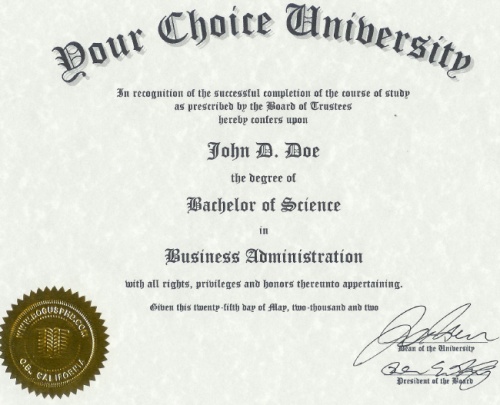
There are plenty of other forms of compliance and authority that we take for granted. As someone who has never been to college, I know first-hand that people look at you differently when they discover you aren’t college educated. It can affect your social and professional standing, your credit, your employment, your residential opportunities, and more. Yet, at the same time, I personally know a number of people who either cheated their way through school (as much as was possible) or chose to pursue majors that they had no actual interest in, simply because the coursework would be expedient, allowing them to get a degree with minimal effort.
The focus on having these degrees has reached such a high level of importance that parents are enrolling their children in college prep programs as early as 5th or 6th grade, expecting that they will have a competitive advantage to get into the best schools. Yet if the degree itself holds very little actual value in its real world application, then why surrender to the authority of higher education in the first place? As a patient comparing two doctors, will a degree indicate which doctor cut corners in pursuit of wealth and which followed a passion to help others? As a voter, will a degree help distinguish the candidate out to establish power and influence from the candidate who truly wants to improve their community?
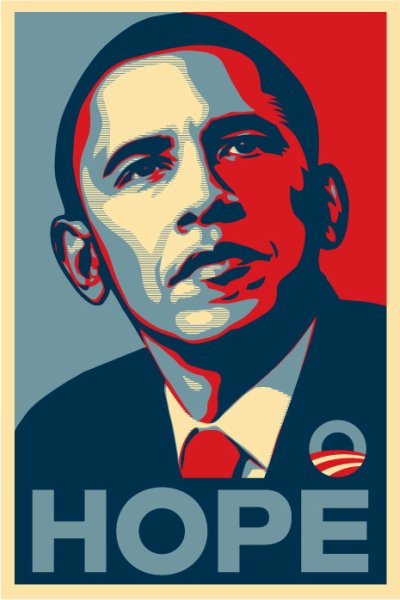
Barack Obama is a Democrat and a Columbia- and Harvard-educated lawyer. He’s also the President of the United States. The first black President. A Christian. Millionaire. A brand name. And one of the most eminent authorities in the world today. It’s no mistake that Shepard Fairey was behind the iconic portrait plastered everywhere during the 2008 election. Obama was/is a master of the personal brand (with plenty of calculated guidance from David Axelrod and crew). Delivering the idea and the image in an easily-digestible and memorable way, but without seeming intentionally focused on style over substance.
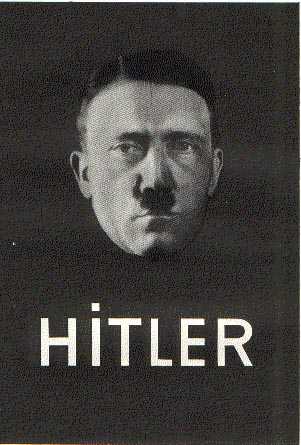
Hitler was also a master at the personal brand. The bold stylistic choices made in Nazi propaganda and decoration were no accident. Careful consideration was given to the adoption of the swastika symbol, flipping it around counter-clockwise, placing it within a white disc on a red background. The size of the disc and the thickness of the lines in the swastika were deliberate choices made to achieve a desired effect. Long before the Holocaust and the truth of the Reichstag fire were a matter of public record, Adolf Hitler represented one simple thing to the battered people of Germany, frustrated with their post-World War I struggles, eager to see a strong Germany rise again to prominence: hope. He recognized and manipulated this desire within the people to be led, to submit to an authority greater than themselves. Given this context, it’s no surprise that Obama has been compared so often to Hitler (no matter how misguided that comparison may be).
Ultimately, compliance and submission to authority represent a conscious choice within each individual to trade personal responsibility and true freedom for comfort and security. When this choice is made, the individual often chooses to view the choice as something external, a decision that has been made for them. There is an increasing trend in modern society to assume the role of a victim actively seeking the archetypal savior. A submission of will to a figure of authority is often seen as the answer to a problem deemed too large to fix by ourselves. “Let go, let God.” “Support our troops.” “You’re in good hands with Allstate.”
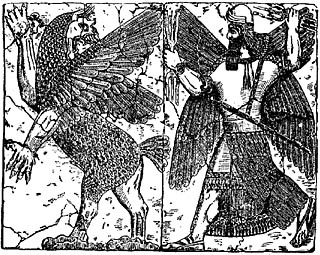
These archetypes continue to exist because there is a conflict within each individual when presented with the choice of personal responsibility. We are conditioned to put our trust and faith in these authority figures and to comply with their demands or expectations. We consciously – and subconsciously – use these authorities to judge others’ abilities, intentions and potential. But governments, religions, businesses, institutions and organizations have all risen and fallen, time and again. Whether incorrect, ineffective or irrelevant, most forms of authority eventually outlive their usefulness. Yet instead of a change in the collective approach to personal responsibility, more often than not, a new authority is sought or created to fill the need for the savior, the father figure, the protector.
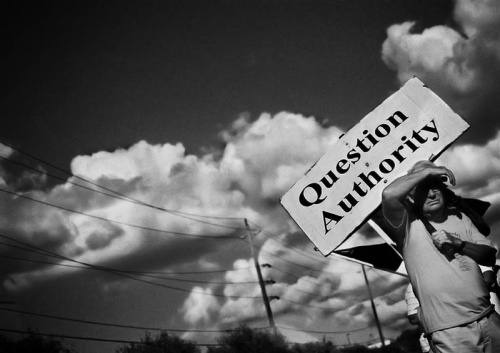
“Think for yourself and question authority.” It’s been said many times by many people, but few truly understand the full power of this statement. Even this blog post should be questioned. Information is not inherently good or bad, right or wrong. Information is just data; it’s all in how it’s processed by each individual mind, and the only way to truly control that process is to accept personal responsibility and grant yourself authority over your own world.